

Te fundit

Albanian students bring a film classic into Greek classrooms

28 Korrik 2026, 09:23Culture
TEMA
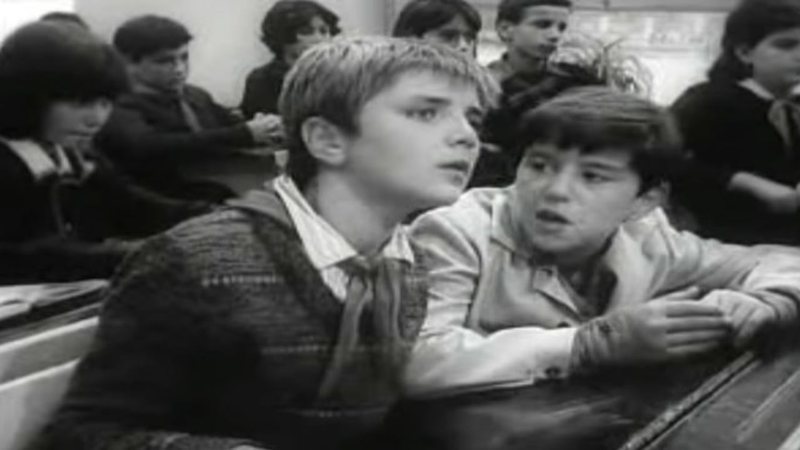
Three decades after Albanian children entered Greek schools facing pressure to adapt to a new language, a group of students has turned bilingualism into a cultural bridge.
Seven students of Albanian origin at a vocational school in Nea Moudania, northern Greece, translated and subtitled the 1981 Albanian film Shoku ynë Tili — Our Friend Tili — into Greek.
The project was carried out with teachers from the school and the Department of Philology at Aristotle University of Thessaloniki. Its aim was to challenge national and linguistic stereotypes through cinema.
The students worked on dialogue, humour and cultural references that could not always be translated word for word. Their knowledge of both languages helped them explain an Albanian film to a Greek audience without losing its original character.
The choice of film also carried a message.
Tili is a difficult schoolboy who struggles in class. One teacher wants him removed, while another tries to understand and support him. The story deals with inclusion, responsibility and the treatment of children who need more help.
Those themes matched the purpose of the school project.
For the Albanian-origin students, the work was also a return to the language and culture of their families. For their Greek classmates, it offered a view of Albanian society through a familiar setting: the classroom.
Linguistics professor Dhoris Kyriazis said translation was not simply the movement of words between two languages. It also allowed students to explain customs, social references and ways of thinking.
He described the students as young people with two languages, two cultures and two homelands.
That identity was once often treated as an obstacle in Greek schools. During the large wave of Albanian migration in the 1990s, many children entered classrooms with limited Greek and were expected to adapt quickly.
The Nea Moudania project presents the same bilingual background as an advantage.
The school and Aristotle University now plan a pilot programme comparing Albanian and Greek literature in integration classes. Students will study how books, films and other works from both countries present migration, friendship and relations between neighbouring societies.
The project also reflects a wider change in Greece. The image of Albanian migrants in Greek films and television has gradually moved away from the stereotypes common in the 1990s.
In Nea Moudania, that change took a simple form: Albanian students placed Greek subtitles on an old film and made one culture easier for another to understand.


Lini një Përgjigje