

Te fundit

When America Falls Silent: The Strategic Costs of Dismantling VOA

4 Korrik 2026, 11:39World News
TEMA
The United States is confronting the consequences of relinquishing one of its most enduring instruments of soft power a year and a half after the Trump administration dismantled the Voice of America (VOA). That decision, part of an effort to shut down the U.S. Agency for Global Media (USAGM), silenced an institution that had delivered independent, fact-based journalism into some of the world’s most contested information environments and, through that work, embodied and conveyed America’s democratic principles.
The U.S. retreat from the global information contest has eroded its capacity to shape global understanding and ceded influence to competitors who weaponize information. The damage has been profound, lasting, and corrosive to U.S. credibility and long-term national interests. At a time when information itself has become a strategic battleground, the costs of this retreat are too high to ignore, and a course correction is now essential.
For someone who spent more than four decades at VOA, the dismantling has been painful to watch—not out of institutional sentiment, but because of what the United States has forfeited: a trusted voice capable of explaining America accurately and with integrity, advancing its foreign policy objectives through credible reporting, and reaching strategic audiences at the very moment such engagement is most needed.
Inside the Voice
I witnessed VOA operate at defining moments in modern history: the collapse of communism and the emergence of democratic systems in the former Soviet Union and Eastern Europe, the wars in the Balkans, the Orange and Rose Revolutions, and Russia’s invasion of Ukraine. In each of these periods, VOA proved its worth. It delivered objective news and information, provided an unfiltered window into America’s democratic discourse and institutions, and explained U.S. policy in ways that helped foreign publics understand the stakes of U.S. engagement. Today’s global information landscape—marked as it is by disinformation, distortions of U.S. actions, rapid technological change, and rising authoritarianism—makes the need for such a voice clear. If VOA did not exist, it would need to be invented.
The Trump administration justified its action by asserting that VOA was politically biased, unaccountable, and vulnerable to foreign influence. No independent investigation or systematic content analysis was conducted; assertion replaced assessment; and unsubstantiated allegations stood in for evidence. Senior officials claimed that VOA had broadcast anti-American news and suggested that future reporting should reflect positively on the United States.
This framing fundamentally misunderstands journalism, treating accuracy and transparency as disloyalty and conflating the essential distinction between independent reporting and political control of VOA. By equating editorial independence with political defiance, the administration undermined an institution that had served presidents of both parties precisely by maintaining its nonpartisan integrity and fulfilling its statutory mandate.
My own experience contradicts the claims of systemic bias and foreign political influence. As director of VOA’s Eurasia Division, responsible for coverage of Russia, Ukraine, the Caucasus, and the Balkans, I oversaw journalism grounded in rigorous editorial standards and constant internal scrutiny. As acting director of VOA in 2020, I had direct visibility into the work of all regional divisions. Had systemic bias or foreign influence existed, it would have been immediately apparent. VOA had robust internal checks; U.S. embassies monitored our broadcasts; and VOA journalists themselves would not have tolerated political manipulation. Like any large news organization, VOA occasionally made mistakes, but these were isolated and swiftly corrected through established editorial processes—evidence of a journalistic culture, not institutional bias.
The absence of deliberation behind the decision to shutter VOA was equally troubling. There was no consultation with Congress, the foreign policy community, or American experts in international broadcasting. No one asked the essential question: What happens the day after? What replaces VOA’s reach, credibility, and influence?
For decades, VOA was one of the most cost-effective assets in America’s global engagement. With a budget of roughly $250 million, modest by national security standards, it reached hundreds of millions of people weekly in 48 languages. Its mandate, enshrined in the VOA Charter, was straightforward: to provide accurate, objective, and comprehensive news; represent America’s diversity and values; and present U.S. policies clearly and responsibly. This dual mission was often misunderstood by critics, but it was precisely what made VOA effective. It was not propaganda; it was high-quality journalism practiced in full view of the public, and its credibility was the foundation of its influence.
The consequences of dismantling such a vital institution are visible across every part of the world where U.S. interests are at stake.
Case Studies
Iran offers one of the clearest illustrations of what has been lost. For years, VOA’s Farsi language programming provided Iranians with comprehensive, multiplatform coverage that combined daily news, in-depth analysis, live call-in shows, and reporting on human rights and U.S. policy debates. That breadth and consistency created a trusted alternative to state-controlled information and enabled millions of Iranians to follow and understand U.S. actions in real time.
Since the February 28 start of the Iran War, in particular, the absence of sustained, authoritative reporting by VOA in Farsi and other languages has allowed narratives promoted by U.S. adversaries to dominate foreign public discourse. Despite a scramble to restore some programming, the result bears little resemblance to VOA’s earlier presence: It reaches fewer audiences, lacks the depth and continuity that once defined VOA’s reporting, and cannot counter the volume and velocity of state-driven anti-American narratives.
In Russia, where VOA once provided clarity and a trusted alternative to state propaganda, Kremlin-controlled media now dominates the information space unchallenged. After the Russian government forced VOA to close its Moscow bureau in 2022, we were still able to reach Russians on digital platforms. Now, however, with the termination of VOA broadcasts altogether, reliable information about the U.S. is much harder for ordinary Russians to access, and the loss extends far beyond U.S. policy explanation.
VOA offered what no domestic outlet could safely provide: sustained coverage of Vladimir Putin’s authoritarian system, including the shrinking space for political opposition, pressure on independent media, pervasive corruption, and the manipulation of elections and public institutions. It reported on the harassment, imprisonment, and murder of opposition figures such as Alexei Navalny and Boris Nemtsov—stories state media distorted or ignored. With the silencing of VOA, Russians lost one of the few outlets that helped them understand the political forces shaping their own society.
In Ukraine, VOA’s silence has been especially damaging. VOA’s Ukrainian Service provided verified reporting during a period of profound national crisis, offering something no domestic outlet could fully replicate: clear explanations of U.S. policy, debates within Washington, and the broader Western response to Russia’s aggression. By silencing VOA, the United States eliminated one of the few trusted sources capable of conveying U.S. intentions directly to Ukrainian citizens at a moment when their survival depends on sustained U.S. and European Union engagement.
Across the Balkans and the Caucasus, the loss of VOA’s reporting has opened information vacuums that authoritarian and illiberal actors have moved quickly to fill. In Serbia and Bosnia, Russian-backed outlets and local partisan media now shape public perceptions of the United States with almost no counterweight, amplifying disinformation that VOA’s fact-based journalism once routinely challenged. In Georgia, where democratic institutions remain fragile and politics are sharply polarized, the absence of a trusted U.S. broadcaster leaves citizens more exposed to anti-American messaging and conspiracy theories pushed by Moscow and its proxies. Armenia, caught between geopolitical pressures and domestic instability, faces a similar surge of external propaganda. In all three cases, VOA’s disappearance has weakened the broader information environment that underpins democratic resilience.
The same dynamics have appeared in other regions where information is tightly controlled, media ecosystems are fragile, or U.S. policy is routinely refracted through state-backed competitors. The circumstances differ, but the result is similar: Without a credible U.S. presence, adversaries’ interpretations gain greater traction. Although VOA has resumed limited programming to China, the loss of full-scale coverage has left Chinese audiences with no alternative to state-controlled accounts of the United States. In the Middle East and Africa, the end of VOA’s broadcasts has enabled regional state media and well resourced external actors to set the terms through which U.S. actions and intentions are understood, with few authoritative alternatives available. Across these regions, the role once played by VOA has been overtaken by Russian, Chinese, Iranian, and other state-backed outlets.
The Most Urgent Step
The cumulative effect of VOA’s silence is a widening vacuum in the global information space. The United States is no longer a consistent participant in the conversation about its own intentions, values, and actions. Adversaries are now setting the terms of debate and, in many cases, deciding which audiences matter most and how those audiences should view American power and purpose. Addressing that trend requires a deliberate shift in course and a renewed commitment to sustained engagement.
The most urgent step is a targeted restoration of VOA operations in core strategic theaters. At the same time, the United States must pursue a broader reform effort grounded in strategy rather than politics, reaffirming the principles that have long defined VOA’s credibility: editorial independence, accuracy, objectivity, comprehensive reporting, and a clear presentation of U.S. policy and the full diversity of U.S. perspectives. These are not obstacles to effectiveness; they are its foundation.
A bipartisan commission composed of experienced foreign policy and national security practitioners, prominent journalists, and regional experts should be established to review VOA’s operations and articulate a renewed mission aligned with today’s geopolitical challenges and global information demands. What must emerge is a revitalized, digitally agile, and strategically focused VOA, protected by strong guardrails that ensure its editorial independence.
For generations, VOA was a uniquely trusted instrument of American soft power, its strategic value recognized across administrations and parties. During his visit to VOA on its 40th anniversary in February 1982, President Ronald Reagan described VOA as “the ultimate weapon in the arsenal of democracy” and praised it for remaining “faithful to those standards of journalism that will not compromise the truth.”
Nearly three decades later, President Barack Obama marked VOA’s 70th anniversary by describing it as “a beacon of truth” that helps people “make informed decisions about their lives and their futures.” That bipartisan understanding has not faded: On January 14, 2026, the House of Representatives voted 341-79, a veto-proof majority, to restore VOA funding—a contemporary reaffirmation of VOA’s enduring mission and value.
For millions, VOA was a beacon of hope and a window into America that no other institution could replicate. Its silence has eroded the nation’s capacity to communicate clearly, credibly, and consistently with audiences that look to the United States not only for reliable information, but also as a benchmark for democratic norms, the rule of law, and press freedoms; as a model of cultural openness and pluralism; and as a counterweight to authoritarian governance.
Restoring America’s voice is now an urgent strategic imperative, not a discretionary choice.
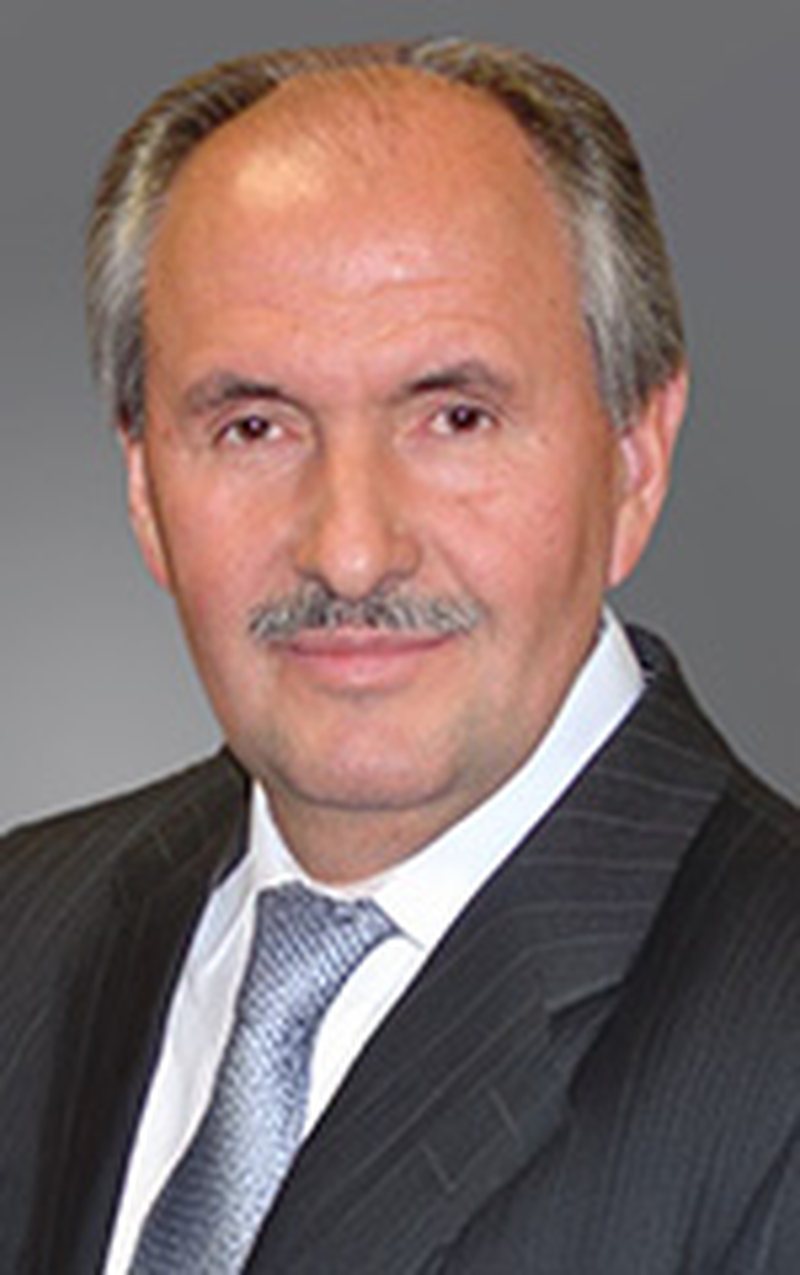
Elez Biberaj retired from the Voice of America in December 2023 after a 43-year career. From 2005 to 2023, he served as director of VOA’s Eurasia Division, overseeing broadcasts to Russia, Ukraine, the Caucasus, and the Balkans. From June to December 2020, during President Trump’s first term, he served as acting director of the Voice of America. He holds a PhD in political science from Columbia University.


Lini një Përgjigje