

Te fundit

Albania concludes Adriatic Charter presidency, seeks stronger regional unity

5 Dhjetor 2024, 08:58Politics
TEMA
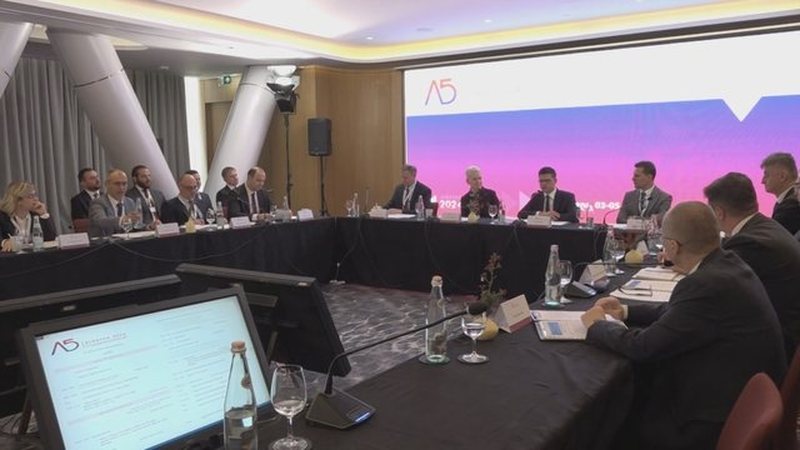
Tirana, Dec 5, 2024 – Albania ended its presidency of the US-Adriatic Charter (A-5) initiative with a meeting of defense ministers in Tirana, discussing regional security and the Charter’s open-door policy for new members. The Charter, formed in 2003 to support NATO integration in the Western Balkans, includes five member countries, with Kosovo holding observer status. Serbia is not part of the group, as it maintains close ties with Russia and resists NATO-led efforts.
The meeting was co-chaired by Albanian Defense Minister Piro Vengu and Celeste Wallander, the US Assistant Secretary of Defense for International Security Affairs. The focus was on new security challenges across Europe, especially in the Western Balkans.
“The Adriatic Charter is key for regional stability, and the United States plays an essential role in maintaining peace and cooperation,” Vengu said.
Calls for renewed cooperation
Given changing global dynamics, Vengu called for a stronger focus on the Charter to address new threats and to allow for expansion of membership.
“Reviving the Charter is crucial. Kosovo’s membership is a top priority for us, and we continue to support the Charter’s open-door policy,” he said.
Wallander agreed, reiterating the US’s support for countries wishing to join NATO. “The United States supports countries aiming for NATO membership. We are committed to the open-door policy and look forward to welcoming new members when the conditions are right,” she said.
Focus on Kosovo attack
The recent attack on critical infrastructure in northern Kosovo also dominated the discussions.
“We looked at several hybrid threats, with a focus on the attack in Zubin Potok,” Vengu said. “This attack threatens regional stability. All members condemned it and called for those responsible to be brought to justice.”
Experts say the attack highlights the ongoing challenges in the region, where political and ethnic tensions continue to disrupt stability.
Wider geopolitical implications
Serbia’s absence from the Adriatic Charter is a sign of its resistance to NATO-led initiatives, instead choosing to strengthen ties with Russia. Analysts believe that expanding the Charter, including Kosovo, could help strengthen Western influence in the Balkans and counter efforts by Russia and other actors to destabilize the region.
Albania’s presidency focused on promoting unity and stability in the Western Balkans as geopolitical tensions rise. Next year, North Macedonia will take over the presidency of the Adriatic Charter.


Lini një Përgjigje