

Te fundit

The journalist beyond the screen: On how to remember the ones who can’t hear us anymore

24 Gusht 2025, 21:05Op-Ed
Ardian Vehbiu
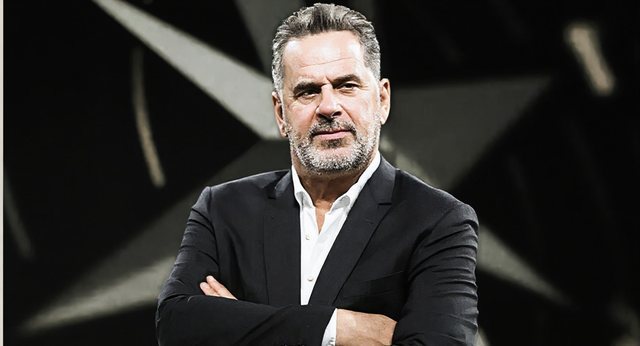
I was deeply saddened by the passing of Artur Zheji, a “compatriot” from Durresi Street and the Avni Rustemi elementary school, and later a friend, even if often from a distance. We shared the same social circle, and at times worked together on his projects with Radio Radicale when he lived in Rome and I in Naples. Later, I followed with great interest his contributions to the Kosovo issue, to human rights and minority rights during the disintegration of Yugoslavia, and his coverage of Albania for Radio Radicale in the 1990s, including the chaos of 1997.
Over time, we lost contact, though I kept reading his editorials on the website “360 Degrees.” He was good at what he did, though I always thought he could have done more.
Today I read many eulogies, formal and informal, from his friends and colleagues. Once again, I was reminded that while our culture often indulges in necrophilia, we do not know how to honour the dead with genuine respect. Respect means refraining from writing nonsense or empty bombast. Perhaps it is too soon, and tomorrow more thoughtful tributes will appear.
Artur had a long career as a journalist, publicist, and TV personality, yet no institution seems to have documented his work for the public. One can still find online recordings of his Radio Radicale reports and interviews, but these remain scattered. Surely he left deep impressions wherever he worked. Someone should have collected, archived, and presented his work in a way that would bring his legacy to the public’s attention.
Again, this points to how poorly we handle the memory of those who pass. Some journalists, incompetent or careless, reported police notes as if his death were a crime to be investigated. Others listed mechanically the places he worked, as if drafting a Wikipedia entry. His close friends spoke passionately, but lacked information.
And since Wikipedia is mentioned: on his page, he is introduced as the “son of the euridite” Petro Zheji — complete with a spelling mistake — and reduced to the offices he held, not his actual contributions. There is no mention of his years at Radio Radicale, a first-class political outlet in Italy from the 1970s through the 1990s, nor of his especially active role during the Yugoslav wars and Albania’s own crises.
I expected that some colleagues, from Kosovo or Albania, would write about his serious, consistent, high-level engagement in support of Kosovo Albanians and their internationalization as a human rights issue. Not just mention it, as I do here without enough information, but analyse it, describe it, and put it in context. It is shocking that no institution or journalists’ association in Albania has gathered and archived such material. Or if they have, they did not think to make it public now.
Once again, it takes a death to reveal how poorly we remember distinguished individuals. We deceive ourselves with elaborate funerals and tearful farewells, thinking they are enough. This is the same reason we argue endlessly about who was truly anti-communist in the 1990s, while never curating the vibrant press of those years. As a result, researchers can more easily consult a third-hand pamphlet about the past century than find the articles that directly challenged Albanian politics in the early years of pluralism.
Artur was a correspondent for Radio Radicale in those years. He reported from Tirana when the country stood on the brink of civil war, anarchy, and disintegration.
If I were a journalist, I would feel embarrassed. To honour Artur Zheji properly, beyond the often meaningless debates of his TV show “360 Degrees,” I would revisit dozens of his interviews and reports from the 1990s. Perhaps there is still time to do this.
The article initially appeared in Albanian titled: "Gazetari larg ekranit. Si duhet të flasim për dikë që ikën dhe nuk na dëgjon më."


Lini një Përgjigje